智能戒指 FPC 主板
一张柔性电路,三张面壳
Smart Ring FPC Core Board
one flexible circuit, three shells
戒指戴在手指上,与指套共享同一生理位点——这意味着固件栈、EDA 体系与算法资产可以高度复用。FPC 上 ECG 电极与 EDA 电极物理同层、分时复用,面壳只决定"暴露哪些电极窗口",电气设计完全一致。 A ring sits on the finger, sharing the same physiological site as the finger-sleeve — so the firmware stack, EDA scheme and algorithmic assets carry over almost intact. On the FPC, ECG and EDA electrodes occupy the same physical layer and are time-multiplexed; the shell merely decides which electrode windows are exposed, while the electrical design stays identical.
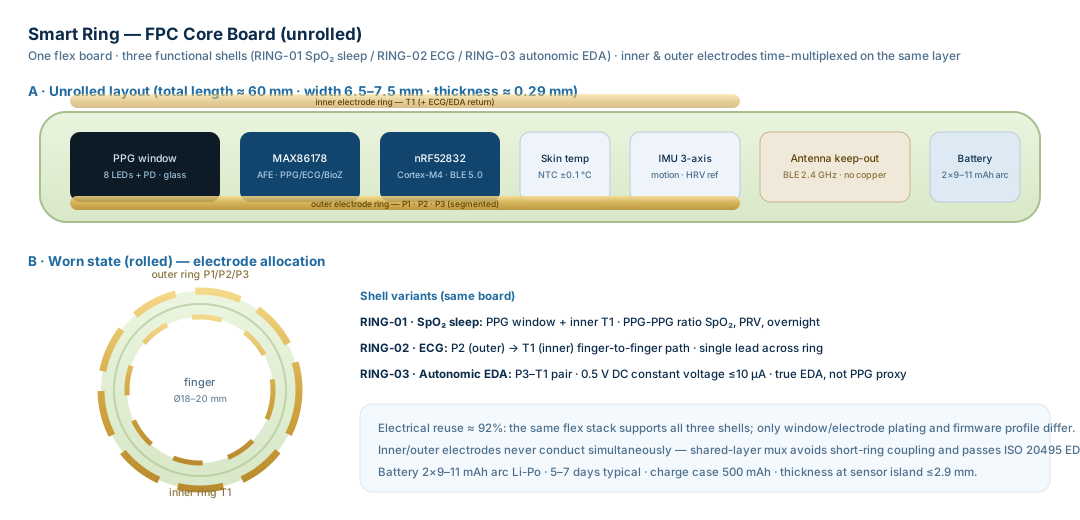
FPC 主板工程规格FPC board specifications
- AFEMAX86178 · PPG + ECG + BioZ(EDA)PPG + ECG + BioZ (EDA)
- 主控MCUnRF52832 · BLE 5.0
- 传感辅助Auxiliary6 轴 IMU + 皮温6-axis IMU + skin temp
- 存储Storage100KB NOR/NAND · ≥7 天睡眠数据≥7 days sleep data
- 电池Battery弧形 Li-Po 2×9–15 mAhCurved Li-Po 2×9–15 mAh
- 充电Charging磁吸(兼容通用充电盒)magnetic (generic dock compatible)
- FPC4 层刚柔结合 · 基准内径 17.3–19.8 mm(US 7–11)4-layer rigid-flex · nominal ID 17.3–19.8 mm (US 7–11)
- 板宽Board width6.5 mm
- 整戒Whole ring≤2.9 mm 厚 · ≤5 g(含壳)≤2.9 mm thick · ≤5 g with shell
- 防护ProtectionIP68 / 3ATM
01 为什么做 86178 戒指Why a MAX86178 Ring
市面健康戒指的两个共同空白 Two gaps common to every health ring on the market市面主流健康戒指的传感器配置 Sensor configuration of mainstream health rings
| 配置项Item | 主流形态Typical | 本 FPCThis FPC |
|---|---|---|
| PPG(HR / SpO₂) | ✓ | ✓ |
| 皮温Skin temperature | ✓ | ✓ |
| 加速度计 / IMUAccelerometer / IMU | ✓ | ✓ |
| ECG | — | ✓ |
| EDA(电极式)EDA (electrode-based) | — | ✓ |
| 所谓"压力"指标So-called "stress" metric | PPG-HRV 算法推算PPG-HRV derivation | 电极直接测量Direct electrode measurement |
主流健康戒指的标准形态是"PPG + 皮温 + IMU + 小容量电池",全行业缺少 ECG 与真实 EDA 电极。而这两项恰好都是 MAX86178 的原生能力。 The standard health-ring form is PPG plus skin temperature plus IMU plus a small battery; the industry almost universally lacks ECG and true EDA electrodes. Both happen to be native MAX86178 capabilities.
两项稀缺能力Two scarce capabilities
- ECG 心电戒指:ECG ring: 利用戒指内表面(指腹侧)与外表面(相邻指自然触碰位)构成指间导联。商用产品中这一形态极为罕见,而 MAX86178 的 ECG_EL 通道可直接支持。 The ring's inner surface (finger-pulp side) and outer surface (naturally touched by an adjacent finger) form a finger-to-finger lead. This form factor is rare commercially, and the MAX86178 ECG_EL channel supports it directly.
- EDA 戒指:EDA ring: 用 BioZ 通道跑 恒流转 0.5 V EDA,配合交流校正漂移 + 直流事件窗的双模式调度。市面上的"压力戒指"全部是 HRV 换算,不是真正的皮肤电导测量。 The BioZ channel runs constant-current to 0.5 V EDA, paired with a dual-mode schedule of AC drift correction plus DC event windows. Every "stress ring" on the market derives from HRV — none measures skin conductance directly.
- 同指同工位复用:Same-site reuse: 戒指与指套共享指部生理位点,EDA 体系、判据算法与参考范围可直接迁移,形成"指套金标准 → 戒指泛化"的降维路径。 Ring and finger-sleeve share the finger site, so the EDA scheme, decision criteria and reference ranges transfer directly — a "finger-sleeve gold standard → ring generalisation" path.
02 FPC 架构FPC Architecture
                    ┌─────────────────────────────────────────────┐
                    │   Ring FPC core board (annular, US7–11 base) │
 Inner face (finger pulp)                                           │
 ┌──────────────┐  │  ┌─────────────┐      ┌───────────────────┐ │
 │ PPG window   │◄─┼──┤ MAX86178    │      │ nRF52832          │ │
 │ Skin-temp NT │◄─┼──┤ PPG·ECG·BioZ│      │ BLE 5.0 · firmware stack   │ │
 │ EDA/ECG inner│◄─┼──┤ EDA (0.5 V) │      │ dual-mode schedule│ │
 └──────────────┘  │  └──────┬──────┘      └─────────┬─────────┘ │
                    │         │ SPI                  │           │
 Outer face (back)   │  ┌──────▼──────┐      ┌─────────▼─────────┐ │
 ┌──────────────┐  │  │ IMU 6-axis  │      │ On-FPC 2.4 GHz    │ │
 │Magnetic pins │◄─┼──┤ Skin temp   │      │ antenna (aperture │ │
 │×2 (charging) │  │ Power / batt │      │ in metal shell)  │ │
 │ ECG/EDA outer│  │ management   │      └───────────────────┘ │
 │ (shell window)│ │  └─────────────┘   Curved Li-Po 2×9–11 mAh  │
 └──────────────┘  │   (distributed along both sides of band, 1–2C) │
                    └─────────────────────────────────────────────┘
一板三壳One board, three shells
同一张 FPC、同一套原理图、同一固件包、同一充电盒。差异仅在面壳的电极开窗位置与固件模式开关——电气复用率约 92%。 Same FPC, same schematic, same firmware image, same charging dock. Differences are limited to shell electrode apertures and firmware mode switches — about 92% electrical reuse.
功耗是护城河Power budget is the moat
弧形电池容量天花板约 22 mAh。双模式调度让 EDA 以"秒级事件窗"而非"全程连续采样"运行,长比可达 5–30 倍。整夜 8 h 全功能目标 ≤15% 电量。 The curved battery caps out near 22 mAh. Dual-mode scheduling runs EDA in second-scale event windows rather than continuous sampling, a 5–30× duty-cycle advantage. Target: ≤15% battery for a full 8-hour night.
天线开窗Antenna aperture
金属面壳会屏蔽 2.4 GHz。方案是在顶部岛区让 FPC 天线外露,或采用陶瓷 / 树脂窗口。EVT 阶段需实测 OTA 强度。 A metal shell shields 2.4 GHz. The approach is to expose the FPC antenna at the top island, or use a ceramic/resin window. OTA strength must be measured during EVT.
03 电极定义与工作模式调度 Electrode Definition & Mode Scheduling
| FPC 电极位FPC electrode | 位置Position | 睡眠 / 血氧款面壳Sleep / SpO₂ shell | ECG 款面壳ECG shell | EDA 款面壳EDA shell |
|---|---|---|---|---|
| P1 | ECG_EL1 / BioZ IN+ 内表面 · 指腹主接触区inner, finger-pulp contact |
不暴露(壳内作 PPG 地参考)Not exposed (internal PPG ground reference) | 暴露(ECG 内电极)Exposed (ECG inner) | 暴露(EDA 内电极,干极)Exposed (EDA inner, dry) |
| P2 | ECG_EL2 / BioZ IN− 外表面 · 相邻指自然触碰位outer, adjacent-finger contact |
不暴露Not exposed | 暴露(ECG 外电极)Exposed (ECG outer) | 暴露(EDA 外电极)Exposed (EDA outer) |
| P3 | PPG 光窗window 内表面主窗inner main window |
暴露Exposed | 暴露Exposed | 暴露Exposed |
| T1 | 皮温Skin temp 内表面inner |
暴露Exposed | 暴露Exposed | 暴露Exposed |
| C1 / C2 | 磁吸充电触点Magnetic charging pins 外表面背面outer back |
暴露Exposed | 暴露Exposed | 暴露Exposed |
固件自动调度(四种模式) Automatic firmware scheduling (four modes)
风险与对策Risks and mitigations
| 风险Risk | 对策Mitigation |
|---|---|
| 弧形电池容量天花板Curved battery capacity ceiling | 双模式调度是功耗护城河;PPG 间歇化;BLE 批量回传Dual-mode scheduling as the power moat; intermittent PPG; batched BLE transfer |
| 干电极长戴漂移Dry-electrode drift over long wear | 交流校正漂移 + 直流事件窗;佩戴自检剔除假信号AC drift correction plus DC event windows; wear self-check rejects artifacts |
| ECG 电极接触阻抗波动ECG contact-impedance fluctuation | 外电极加宽(≥4 mm 弧段);壳窗防汗液桥接;静息 30 s 测量引导Widened outer electrode (≥4 mm arc); shell window prevents sweat bridging; guided 30 s resting measurement |
| 金属壳屏蔽天线Metal shell antenna shielding | 天窗口设计或陶瓷 / 树脂窗;EVT 阶段 OTA 实测Antenna aperture or ceramic/resin window; OTA measured during EVT |
04 一板三戒:产品线矩阵One Board, Three Rings: Product Matrix
血氧睡眠戒指Sleep & SpO₂ Ring
主流件配置(PPG + 皮温 + IMU) Mainstream configuration (PPG + skin temp + IMU)
- 核心指标Core metricsHR / SpO₂ / 睡眠趋势 / 活动量HR / SpO₂ / sleep trend / activity
- 续航Runtime约 7 天~7 days
- 定位Positioning主流走量 · 消费健康大盘Volume mainstream · consumer health
心电戒指ECG Ring
主流件 + 内 / 外 ECG 电极 Mainstream parts plus inner/outer ECG electrodes
- 核心指标Core metrics单导联 ECG · 心律筛查提示(30 s 测量 + 连续监测两模式)Single-lead ECG · rhythm screening notification (30 s spot check + continuous monitoring)
- 目标场景Target成人心律筛查、术后心律监测Adult rhythm screening, post-procedure monitoring
- 定位Positioning差异化 · 医疗入口Differentiated · medical entry point
自主状态戒指Autonomic-State Ring
主流件 + 内 / 外 EDA 电极(与 ECG 复用) Mainstream parts plus inner/outer EDA electrodes (shared with ECG)
- 核心指标Core metrics EDA(恒流转 0.5 V )· 自主神经状态四象限 · 入睡判据 · 佩戴自检EDA (Constant current to 0.5 V ) · autonomic quadrant mapping · sleep-onset criteria · wear self-check
- 目标场景Target学习与认知负荷监测、压力评估与生物反馈训练、睡眠管理Learning and cognitive-load monitoring, stress assessment and biofeedback training, sleep management
- 定位Positioning差异化 · 学术与消费双通道Differentiated · dual academic and consumer channel
宣称纪律(消费与医疗的边界)Claim discipline (consumer vs medical)
- 消费定位款统一用"睡眠趋势 / 作息",不写"睡眠分期"或"呼吸暂停筛查"。 Consumer-positioned variants must say "sleep trend / routine", never "sleep staging" or "apnoea screening".
- 脉率变异性一律标注为 PRV,不写作 HRV。 Pulse-rate variability must always be labelled PRV, never HRV.
- "心律筛查提示"等措辞需持证后使用。 Wording such as "rhythm screening notification" may only be used after certification.
- 面向学生场景的数据做匿名化群体报告,不做个体排名与考核使用。 Data from student scenarios is reported as anonymised group summaries only — never for individual ranking or assessment.
三种形态共用的数据格式One data format for all three forms
无论数据来自指套、胸贴还是戒指,PC 端解析接口完全一致——算法零改动。 Whether data comes from the sleeve, the patch or the ring, the PC-side parsing interface is identical — zero algorithm changes.
查看数据格式 →View the data format →戒指在科研中的角色The ring's role in research
作为"7×24 h 连续外推"通道,补齐锚点采集之间的空档期。 Acting as the "7×24 h continuous extrapolation" channel that fills the gaps between anchor acquisitions.
查看科研平台 →View the research platform →